Introduction
The landscape of home food preparation has evolved significantly over the past decade. What once required multiple specialized appliances—a blender here, a processor there, perhaps a separate tool for something else—can now be consolidated into fewer, more versatile devices. The NutriBullet Triple Prep System NBKS50100 represents this consolidation trend, positioning itself as an all-in-one solution for various food preparation tasks.
Understanding whether a multi-function appliance makes sense for your kitchen requires more than skimming product descriptions. It demands a thoughtful evaluation of what the device actually does, how it performs those functions, and whether its capabilities align with your specific cooking habits and lifestyle. This guide aims to provide that kind of comprehensive perspective, examining the Triple Prep System from multiple angles and offering practical insight into how such a device might fit into a modern kitchen.
What Is the NutriBullet Triple Prep System?
The NBKS50100 is positioned within NutriBullet’s broader ecosystem as a multifunctional food preparation system. Rather than being exclusively a blender, juicer, or food processor, it attempts to bridge multiple categories of food preparation by offering different operational modes and interchangeable components. This approach reflects a growing consumer preference for streamlined kitchen setups that don’t sacrifice functionality for space.
The system builds on the brand’s foundation in personal-sized blending while expanding outward to accommodate other common kitchen tasks. For those unfamiliar with NutriBullet’s existing product line, the brand has established itself primarily through bullet-style blenders designed for individual smoothies and nutrient extraction. The Triple Prep System maintains this design heritage while broadening its scope.
Key Features and Technical Specifications
Motor and Power Delivery
At the core of any blending or processing appliance sits the motor, which determines both the speed at which the device can operate and the consistency of the blending action. The NBKS50100 features a motor rated at 1200 watts, which positions it in the mid-to-upper range for personal blending systems. This power level provides sufficient force for typical blending tasks—smoothies, soups, nut butters—without reaching the professional-grade specifications of larger commercial units.
Motor power, however, tells only part of the story. The design of the blades, the shape of the blending vessel, and the overall engineering of how the motor drives those components all contribute to how effectively a system actually processes ingredients. The Triple Prep System incorporates NutriBullet’s “extraction” design philosophy, which emphasizes breaking down plant matter into smaller particles rather than simply pureeing everything into uniform liquid.
Interchangeable Components and Versatility
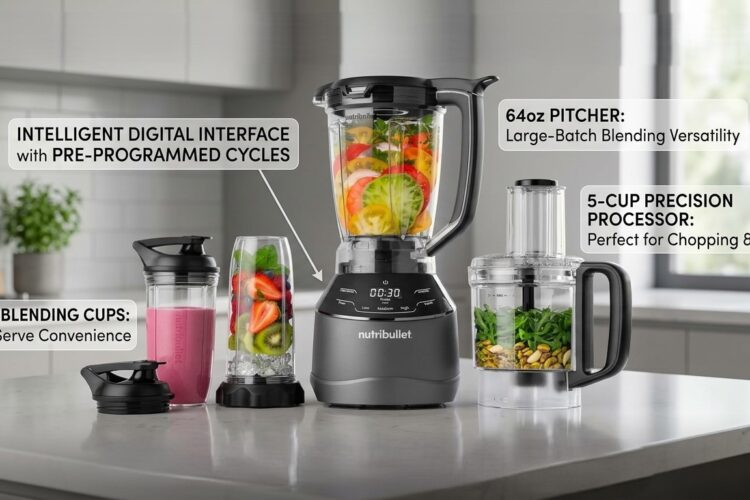
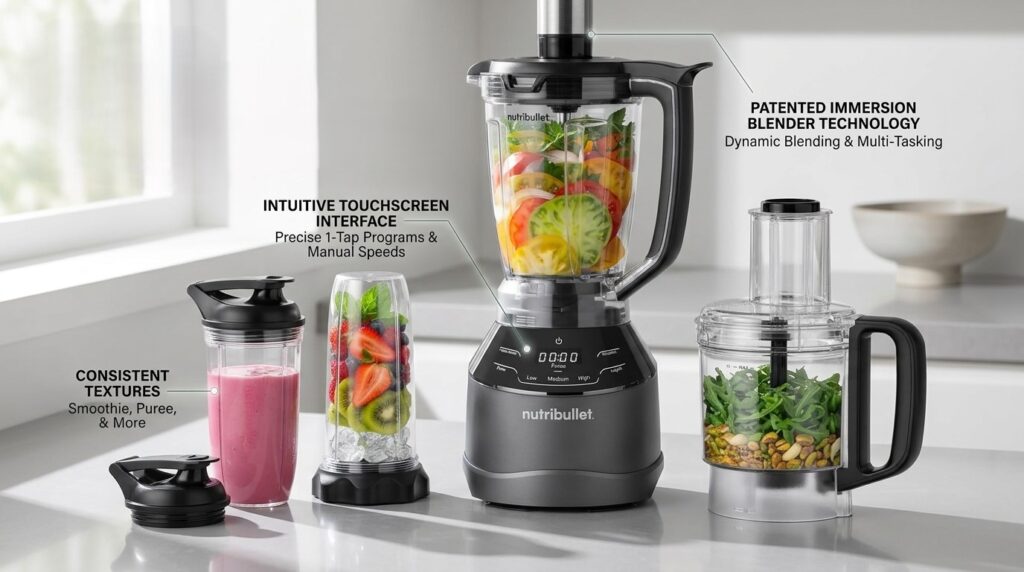
What distinguishes a multi-function system from a single-purpose appliance is its ability to switch between different tasks. The NBKS50100 includes several distinct components designed for different purposes. The system comes equipped with a nutribullet blending pitcher, a food processor bowl, and additional accessories designed to handle various preparation methods.
The blending pitcher serves the traditional role—mixing liquids and softer ingredients into smooth beverages. The food processor bowl, by contrast, operates with different blade configurations designed to chop, slice, shred, or mince solid ingredients. This separation means users aren’t forced to compromise with a single blade design that tries to do everything adequately but nothing exceptionally.
The multiple bases and blade sets included in the system provide what NutriBullet calls a “triple prep” approach—the ability to handle three distinct categories of food preparation within one motor unit. Rather than treating this as three devices, the system consolidates them around a single power base.
Control Options and Ease of Operation
The NBKS50100 offers both pulse and continuous blending modes, which affects how users approach different recipes and ingredients. Pulse mode, engaged through button control, allows for manual regulation of blending time and intensity—useful when someone wants to control texture carefully or avoid over-processing ingredients. Continuous mode maintains consistent speed for longer blending periods, appropriate for sustained tasks like smoothie-making or sustained nut butter production.
Variable speed settings give users some control over blending intensity, though the range and how it translates to actual blade speed varies from model to model. Understanding these settings requires some experimentation, as manufacturers often describe speeds somewhat differently than actual rotations per minute.
Vessel Sizes and Capacity
Kitchen appliances must balance power with practicality, and vessel size plays a significant role in both aspects. The system includes vessels of different capacities, designed around the idea that different tasks require different-sized containers. The blending pitcher accommodates single-serve to modest multi-serve quantities, while the food processor bowl handles larger ingredient volumes.
The specific capacity of each component affects workflow and cleanup. A 32-ounce blending pitcher works well for one or two smoothies but requires multiple batches for larger gatherings. A larger food processor bowl might hold enough vegetables for several servings of chopped ingredients without requiring multiple processing rounds.
Build Materials and Durability Considerations
The construction materials of an appliance influence both its lifespan and its suitability for different tasks. The NBKS50100 uses plastic components for the vessels and various attachments, with a stainless steel motor base. This combination balances cost, weight, and durability. Plastic blending pitchers, for instance, resist staining better than glass alternatives and pose less breakage risk, though they may show wear differently over time.
The blades themselves, typically made from surgical-grade stainless steel, handle the demanding work of cutting, crushing, and blending ingredients. Stainless steel maintains its edge better than softer materials and resists corrosion from acidic ingredients or prolonged moisture exposure.
How the NutriBullet Triple Prep System Can Be Used
Smoothies and Beverages
The most obvious use case for any blending system involves creating smoothies and mixed beverages. The blending pitcher’s design encourages combining fruits, vegetables, liquids, and supplementary ingredients into cohesive drinks. Unlike older blender designs that might separate ingredients or create chunky results, the extraction-focused blade design works to break down plant fiber into finer particles.
Someone preparing a green smoothie, for instance, would combine leafy greens, fruit, liquid, and perhaps a fat source like nut butter. The system’s design attempts to thoroughly incorporate these elements without requiring excessive blending time. This becomes relevant for anyone concerned about heat generation during extended blending, which can theoretically affect nutrient retention (though research on this remains mixed).
The system’s portability—or at least the accessibility of individual-serving pitcher options—means someone could prepare a smoothie and consume it from the same vessel, reducing dishes and simplifying morning routines.
Soups and Hot Preparations
A feature often overlooked in personal blending systems involves the heat generated during operation. Extended blending creates friction between the ingredients and the blades, gradually warming the mixture. Some appliances leverage this capability by encouraging users to blend hot soups directly, using friction heat to warm the ingredients throughout without stovetop cooking.
The NBKS50100’s motor power and blade design make hot soup preparation feasible. Someone might blend warm broth with cooked vegetables to create a thick, creamy bisque-style soup, or process room-temperature ingredients into a smooth base and allow friction heat to warm the mixture during blending. This approach works particularly well for preparations where the blending action itself—breaking down cell walls and creating a homogeneous texture—constitutes the primary cooking method.
Nut and Seed Butters
Creating nut and seed butters represents one of the more demanding tasks a personal blender undertakes. Nuts contain high oil content, and the challenge involves transforming coarse nut particles into a smooth, fluid butter without creating an oily paste. The motor power and blade design of the NBKS50100 position it as potentially capable of this task, though the time required may be longer than with larger food processing equipment.
The approach typically involves placing roasted nuts (often whole or lightly chopped) into the blending pitcher and running the system on high for several minutes, pausing periodically to push the mixture down toward the blades. Patience becomes a factor, as the transformation from chunky mixture to smooth butter can require extended processing time. Those seeking quick preparation times might find this limitation frustrating, while others appreciate the simplicity and control the process offers.
Chopping and Food Processing
The food processor bowl component shifts the system’s functionality toward dry ingredient processing. Vegetables can be chopped finely or coarsely depending on blade selection and processing time, herbs can be minced, nuts can be partially ground for texture rather than smooth application, and various ingredients can be combined and mixed.
This expands the system’s utility beyond beverages into actual cooking preparation. Creating a mirepoix (the foundational vegetable combination in many cuisines), mincing ingredients for salads, preparing breadcrumbs from day-old bread, or creating chunky salsas all fall within the food processor mode’s capabilities. The food processor bowl often accommodates more solid, dense ingredients than blending pitchers, making it the appropriate choice for these tasks.
Grinding and Milling
Dry ingredients can be ground into finer textures using the food processor component. Grains might be ground into flour, seeds can be milled, coffee beans can be reduced to grounds, and various spices can be crushed into powder. This capability, when it exists within a multi-function system, removes the need for separate single-purpose grinders for many home cooks.
The distinction between a blender and a grain mill matters here—grain mills operate using different mechanics than blenders, with slower speeds and more grinding action rather than impact blending. Some versatile systems approximate grain mill functionality through their food processor mode, though truly fine flour production might not match dedicated equipment.
Frozen Desserts and Smoothie Bowls
A thick, textured frozen beverage or smoothie bowl requires different handling than a thin, pourable smoothie. The system’s power and processing capability allow it to incorporate frozen fruit into recipes, creating thicker, more textured results. The challenge involves balancing liquid content and frozen ingredient proportion—too much ice or frozen fruit creates a frozen mass that barely blends, while too much liquid produces a thin drink rather than a thick bowl-texture result.
Many people using personal blenders for frozen desserts reduce liquid content and use more frozen fruit or even ice cream to create spoon-thick results, transforming the beverage into a more substantial dessert component.
Sauces and Dressings
Emulsified sauces—from vinaigrettes to creamy dressings—benefit from thorough blending that incorporates ingredients uniformly and creates stable emulsions. The NBKS50100’s extraction blade design works to break down particles finely, potentially creating more stable sauce structures than less powerful systems. Someone making a dairy-free creamy dressing might blend coconut milk with herbs, citrus, and seasonings into a smooth, cohesive result.
This application represents an intersection between beverage preparation and food processing, using blending mechanics to create smooth, mixed preparations that aren’t necessarily drinks.
Who Might Find This System Suitable
Health-Conscious Individuals
People focused on nutrition and incorporating more whole plant foods into their diet frequently turn to blending systems to simplify preparation and increase consumption of vegetables and fruits. The extraction-focused design philosophy appeals to this demographic, as the marketing often emphasizes nutrient breakdown and cellular disruption—concepts aligned with nutritional optimization goals.
Someone pursuing dietary changes—whether toward vegetarianism, whole-food focus, or specific health goals—might use a system like this multiple times daily as a central kitchen tool. For this user, the investment in a versatile, reliable appliance becomes more defensible from both a usage and a value perspective.
Individuals With Limited Kitchen Space
Multifunctional systems inherently appeal to anyone lacking adequate space for multiple single-purpose appliances. Urban dwellers, apartment residents, or anyone with minimalist kitchen setups find value in consolidating blending, processing, and grinding capabilities into fewer physical devices. The trade-off involves accepting compromise—a single system rarely excels at every function the way specialized equipment might—but the spatial benefit makes this trade worthwhile for many people.
Busy Professionals and Parents
Quick meal preparation drives purchasing decisions for many households. A system capable of rapidly transforming raw ingredients into ready-to-consume meals addresses real lifestyle constraints. Parents preparing meals while managing multiple children, or professionals with limited cooking time, appreciate appliances that reduce preparation steps and complexity.
The notion that someone can quickly prepare nutrient-dense beverages or process vegetables into ready-for-cooking forms appeals to time-constrained individuals. Whether the system actually saves significant time depends on specific use cases, but the perception of efficiency often matters as much as actual time savings.
Individuals Transitioning to Home Cooking
Someone moving from convenience foods and restaurant meals toward home cooking needs basic equipment without overwhelming complexity or expense. A multifunctional system provides multiple capabilities without requiring individual purchases of specialized items. This appeal often attracts people early in their cooking journey, before preferences solidify around specific equipment or techniques.
Important Things to Consider Before Purchasing
Motor Runtime and Heat Generation
High-powered motors generate heat through friction during operation. While some manufacturers present this as a benefit (arguing that friction warming preserves nutrients compared to stovetop cooking), extended blending sessions do elevate internal temperatures. If someone intends to use the system for long daily processing sessions, understanding thermal management becomes important.
The system’s design determines how long you can run it continuously before potential thermal stress. Many personal blenders incorporate safety features that shut down the motor if temperatures exceed safe ranges, but understanding these limitations helps users set realistic expectations.
Noise Levels
Powerful motors operating at high speeds generate sound. Personal blenders—particularly those with significant wattage—typically exceed 80 decibels during operation, comparable to busy traffic or a vacuum cleaner. For anyone blending early mornings before other household members awake, or in open-plan living spaces, this becomes a practical consideration.
While most manufacturers don’t heavily emphasize noise levels in marketing materials, real-world users consistently identify this as a factor affecting long-term satisfaction, particularly for frequent use patterns.
Learning Curve and Optimization
Multifunctional systems involve more components, more modes, and more potential configurations than single-purpose appliances. While this versatility appeals in concept, achieving good results across different applications often requires experimentation. Someone accustomed to using a basic blender might initially produce suboptimal results with a food processor bowl, or might not understand how particular settings affect different ingredients.
Investing time in learning the system’s capabilities—through trial, recipe research, or manufacturer guidance—affects actual satisfaction and long-term usage patterns.
Cleanup and Maintenance
The presence of multiple components increases overall cleaning requirements. Rather than rinsing a single pitcher, users manage multiple vessels, varying blade assemblies, and different seals. For individuals who prioritize convenience, this added complexity might outweigh the benefits of multifunctionality.
Additionally, understanding proper maintenance for each component ensures longevity. Different materials require different care approaches, and improper cleaning can damage seals or dull blades.
Ingredient Preparation and Texture Control
Different appliance designs produce different textures and handle ingredients differently. The NBKS50100’s particular blade geometry and motor characteristics produce specific results that might differ from what someone achieved with previous equipment. Someone accustomed to smooth, completely pureed results might find the extraction-focused texture different, requiring adjustment in recipes or expectations.
Space and Storage
While multifunctional systems save space compared to multiple single-purpose appliances, they still require dedicated storage. Understanding where the system will live—on countertops or in cabinets—and ensuring regular accessibility affects how frequently people actually use equipment.
Comparing General Appliance Categories
The market for food preparation appliances encompasses several distinct categories, each with different strengths and ideal use cases.
Personal Blenders vs. Full-Size Blenders
Personal blenders (into which the NBKS50100 falls, when operating in blending mode) typically accommodate individual servings or modest multi-serve quantities, with motor power ranging from 600 to 1500 watts. Full-size blenders often exceed 1500 watts and handle larger volumes and more demanding tasks. Personal systems offer compactness and often higher blade speeds relative to volume, while full-size systems handle batch preparation and more robust ingredients.
The choice between categories depends on actual usage patterns. Regular smoothie drinkers preparing for one or two people might find a personal system entirely adequate, while someone regularly preparing beverages for larger groups or undertaking more aggressive blending tasks might prefer full-size capability.
Food Processors vs. Blenders
Food processors and blenders operate on fundamentally different mechanical principles. Blenders use high-speed blades to create friction and break down ingredients through impact, while food processors typically operate at lower speeds using broader blades for chopping, slicing, or grinding actions. Each excels at different tasks—blenders create smooth, cohesive mixtures from soft ingredients or liquids, while food processors excel at controlling texture in solid ingredients.
Multifunctional systems attempt to bridge these categories by offering both components. The effectiveness of this compromise depends on how well each component is engineered for its intended use.
Dedicated Appliances vs. Multifunctional Systems
A kitchen outfitted with separate blender, food processor, and grinder represents maximum specialization—each appliance optimized for specific functions without compromise. This approach maximizes performance but requires space and represents higher investment across multiple devices. Conversely, a single multifunctional system represents minimum specialization but maximum space efficiency and lower investment, with performance compromises in each category.
The practical choice depends on individual priorities, available space, budget constraints, and actual usage patterns. Someone using each function daily might appreciate multifunctionality enough to accept performance trade-offs, while someone using one function frequently and others rarely might prefer single-purpose optimization.
Frequently Asked Questions About the NutriBullet Triple Prep System
How Powerful Is the Motor Compared to Other Systems?
The 1200-watt motor positions the NBKS50100 in the mid-upper range for personal blending systems. This provides adequate power for typical smoothies, nut butters, and processing tasks, though it doesn’t match commercial-grade or premium household blenders in absolute power output. For the intended use cases—personal beverage preparation and kitchen food processing rather than commercial production—the power level generally proves sufficient.
Can It Handle Ice or Frozen Fruit Consistently?
Personal blenders with 1200-watt motors can process ice and frozen fruit into smoothies, though results vary based on specific ice cube size and liquid content. Extended ice processing might strain the motor more than softer ingredients, and results may be less smooth than professional-grade systems. Incorporating smaller ice amounts and including adequate liquid typically produces acceptable results.
How Long Does a Typical Blending Session Take?
This varies dramatically based on the task. Simple smoothies might require 30-60 seconds, while thicker preparations or nut butter production might take several minutes. Pulsing provides more control but requires more total hands-on time than sustained blending. Actual time depends more on ingredient properties and desired final texture than on the appliance specifications.
Does This System Generate Significant Heat During Operation?
Yes, like most high-powered blenders, the NBKS50100 generates heat through friction. Extended blending sessions (5+ minutes) warm the contents noticeably. For most smoothie preparation (60-90 seconds), heat generation poses no practical concern. If someone regularly blends for extended periods, understanding this characteristic helps inform realistic expectations.
What’s the Learning Curve for Someone New to Multifunctional Systems?
Most people adapt to multifunctional systems within a few uses. Basic operations become intuitive—moving from blending pitcher to food processor bowl primarily involves changing components and adjusting mental expectations about desired texture outcomes. Optimization and developing technique takes longer, but fundamental usability presents minimal challenge for most consumers.
How Does Cleaning Compare to Single-Purpose Blenders?
Multiple components require more total washing and attention to various seals and blade assemblies. Blending pitchers often rinse quickly, while food processor bowls with multiple blade sets require more deliberate cleaning. For someone prioritizing speed and simplicity in cleanup, multifunctional systems add modest complexity. For others, the streamlined single-motor approach still reduces overall cleanup compared to maintaining separate appliances.
Will This System Handle Commercial or Restaurant-Style Use?
No. This remains a home-use appliance designed for household preparation quantities and frequencies. Commercial or semi-commercial use—such as a small café or juice bar—would exceed the system’s intended operating parameters and likely void warranties.
How Long Do These Systems Typically Last?
Longevity depends on usage frequency, care quality, and specific component durability. Well-maintained systems functioning within design parameters often provide serviceable performance for several years. Blade dulling, seal degradation, or motor wear become limiting factors over time. Unlike simple machines with fewer components, multifunctional systems have more potential points of failure, though this doesn’t necessarily shorten overall lifespan if components are quality-engineered.
Can I Use It For Hot Liquids Directly From the Stove?
Caution is necessary when blending hot liquids. Steam and pressure can build during blending of very hot liquids, potentially creating unsafe conditions. Allowing hot preparations to cool slightly before blending, or blending smaller batches with more careful lid management, reduces these risks. The system’s design doesn’t specifically incorporate steam vent technology, so standard hot liquid safety practices apply.
What Accessories or Replacement Parts Are Available?
NutriBullet typically offers replacement pitchers, blade sets, and various compatible containers for their systems. Availability varies by retailer and region. Understanding what’s available in your area before purchasing helps if damage or wear requires component replacement later.
Understanding the Extraction Concept
NutriBullet has built significant marketing around the concept of “extraction”—fundamentally about breaking down plant cell walls to access nutrients and create more digestible preparations. While marketing claims about nutrient availability warrant skepticism (the human body’s nutrient absorption depends on multiple factors beyond how finely ingredients are blended), the practical reality is that thorough blending does create smooth, fully integrated preparations without visible chunks or separation.
Whether this translates to meaningfully different nutritional outcomes compared to less aggressive blending remains scientifically ambiguous. The marketing emphasizes what the blending action accomplishes mechanically—breaking down cellular structures—without making specific nutritional claims that would face regulatory scrutiny. For practical purposes, thorough blending creates consistent texture and fully incorporated flavors, which most users appreciate regardless of the theoretical nutrient extraction benefit.
Making the Decision
Selecting between appliance options ultimately depends on matching capabilities to actual lifestyle patterns and preferences. A multifunctional system makes sense for someone who:
- Values space efficiency and likes consolidated kitchen equipment
- Plans to use the system regularly across multiple functions
- Accepts modest performance compromises in exchange for versatility
- Has adequate counter or storage space for the consolidated unit
- Appreciates the convenience of single motor base for different tasks
Conversely, someone who:
- Primarily needs consistent smoothie preparation with minimal food processing
- Has limited budget and can only afford single-purpose equipment initially
- Prioritizes maximum performance in particular function (smooth nut butters, for instance)
- Dislikes managing multiple components
- Has significant space constraints at more severe levels
Might find different solutions more appropriate.
The NutriBullet Triple Prep System NBKS50100 occupies a practical middle ground in the appliance market—not entry-level in price, not premium in ultimate performance, but offering genuine versatility in a reasonably compact package for someone whose needs align with its capabilities.
Conclusion
The NutriBullet Triple Prep System NBKS50100 represents the modern approach to kitchen appliances—consolidating multiple functions into a single motor base with interchangeable components designed for different preparation tasks. With its 1200-watt motor, extraction-focused blade design, and multiple vessel options, the system addresses the needs of people seeking efficient, space-conscious kitchen solutions.
Understanding what this system can realistically accomplish—and where it involves compromises compared to specialized single-purpose equipment—helps potential users make informed decisions aligned with their actual cooking patterns and lifestyle requirements. The system excels for regular smoothie preparation, vegetable processing, and miscellaneous blending tasks for one to several people, while those seeking high-volume or highly specialized performance might find differently configured equipment more suitable.
Kitchen appliances ultimately serve practical purposes in daily life. A system that gets used regularly because it’s accessible, straightforward, and capable of multiple tasks often outperforms expensive specialized equipment that requires storage and setup for each use. The genuine value of multifunctional systems lies not in marketing claims but in practical integration with real household routines.