Introduction
Blenders have become standard kitchen appliances for many households, serving purposes that extend well beyond making smoothies. Whether you’re interested in preparing fresh juices, creating creamy soups, grinding nuts into butters, or blending frozen ingredients, having the right equipment can significantly impact both the quality of your results and the efficiency of your preparation process.
The NutriBullet SmartSense represents one approach to multi-functional blending that combines several design features into a single system. Rather than promoting it as a universal solution for everyone, it’s worth exploring what this particular model offers, how it functions, and whether its capabilities align with specific kitchen needs and preferences.
Understanding what a blender can and cannot do, along with recognizing how different features translate into real-world usage, helps you make an informed decision that suits your lifestyle rather than simply purchasing based on marketing language.
What the NutriBullet SmartSense Actually Is
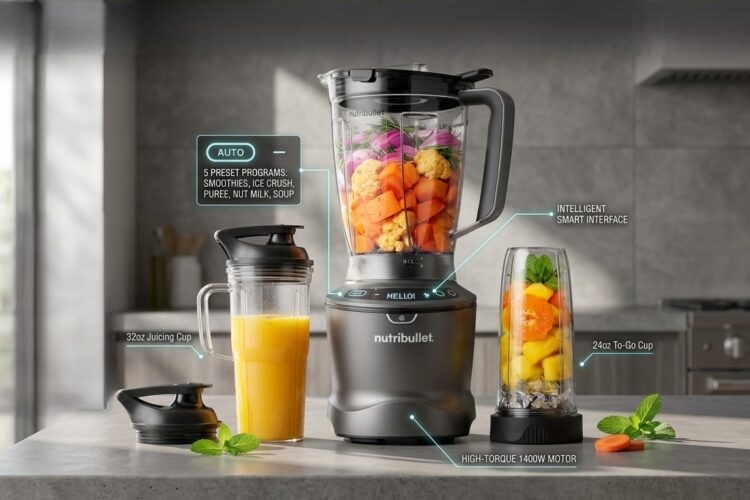
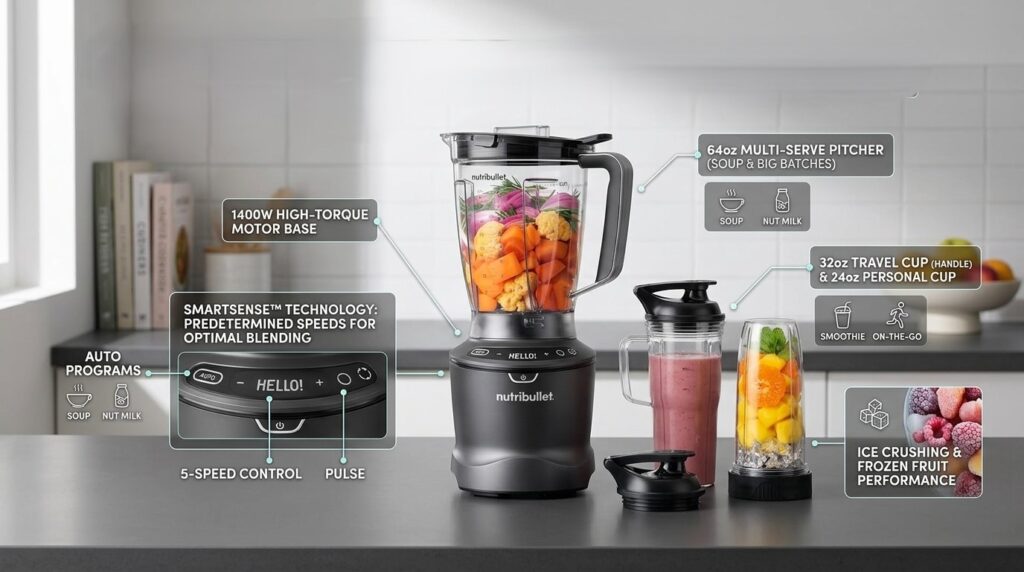
This model is a countertop blender system that comes with multiple components: a 64-ounce pitcher along with a 32-ounce cup and a 24-ounce cup. The motor operates at 1400 watts and provides five speed settings. The unit is designed to handle various blending tasks, from processing smoothie ingredients to heating soups through friction and creating nut-based milk alternatives.
The multiple cup options represent a practical design choice—having different sizes means you’re not always filling a large pitcher when preparing a single serving, and you’re not struggling to blend small quantities in oversized equipment.
Breaking Down the Key Features
Power and Motor Performance
A 1400-watt motor indicates a mid-to-high range blending capacity. This wattage level generally suggests the machine can handle demanding tasks like processing ice, frozen fruits, and tougher ingredients such as whole nuts without struggling. However, it’s worth noting that wattage alone doesn’t determine performance—design efficiency, blade construction, and how the motor is utilized all factor into actual blending capability.
The five-speed settings provide variable control rather than a single fixed speed. This means you can adjust intensity depending on your task. Lower speeds work for gentle blending of already-soft ingredients or when you want more control over texture, while higher speeds tackle tougher ingredients or work to heat ingredients through friction when making warm soups.
The Multi-Cup System
Rather than forcing all blending into one pitcher size, this system includes three options. The 64-ounce pitcher suits larger batches—useful if you’re preparing drinks or bases for a family or making enough to store for several servings. The 32-ounce cup handles medium portions, and the 24-ounce size is designed for single servings or smaller recipes.
From a practical standpoint, this approach reduces wasted space in your blender. If you’re making a single-serving smoothie, filling a 64-ounce pitcher halfway is less efficient than using appropriately sized equipment. The smaller cups also typically align with common serving sizes, which can be helpful for portion planning.
Versatility Across Blending Tasks
The specifications indicate this unit can process smoothie ingredients, frozen fruit, ice, handle nut milk preparation, and create soup through blending. These represent fairly different functions—a smoothie requires combining soft fruits, liquids, and sometimes protein powder; nut milk involves breaking down nuts and then straining; ice-blending demands power without generating excessive heat that would damage the motor; and soup-making through friction requires sustained operation.
That this single machine is designed to accomplish all of these suggests a broader versatility than single-purpose appliances, though actual performance in each category depends on execution rather than just the claim.
Practical Applications in the Kitchen
Smoothie Preparation
Most people are familiar with using blenders for smoothies. The NutriBullet SmartSense can process typical smoothie ingredients—fruits, yogurt, liquid, and optional additions like nut butters or protein powders. The multiple cup sizes mean you can prepare individual smoothies without unnecessary waste or oversized equipment for that task.
If you regularly make smoothies and want to batch-prepare them for the week, the larger pitcher works efficiently for this. If you prefer single smoothies on demand, the smaller cups may feel more appropriate to your workflow.
Nut Milk Creation
Making nut milk at home involves blending soaked nuts with water at high speed, then straining through a fine mesh. The 1400-watt motor should handle this task, though creating nut milk is more demanding than typical smoothie-making because you’re working with dense ingredients like whole nuts.
This is a legitimate use case if you consume nut milk regularly, as homemade versions can be more economical and customizable than store-bought alternatives. It does, however, add an extra step (soaking and straining) to your process that pre-made options don’t require.
Soup Production Through Friction
Some blenders can heat soup through the friction generated by high-speed blending. This happens when ingredients are blended at maximum speed for an extended period—the mechanical energy converts to heat. If you’re preparing a fresh vegetable soup, this means you can blend hot broth with vegetables and create a smooth, heated soup without separately cooking or heating the liquid.
This function works best with already-soft ingredients or items that become soft quickly, and it’s designed for blending hot liquids that you’ve already started with, not as a complete cooking method.
Ground Nut Butters and Seed Processing
A 1400-watt blender can grind nuts and seeds into butters when run at high speed. This requires patience—the process takes several minutes as oils gradually release from the nuts and create a paste. It’s possible with this motor power, though the time investment is noticeable.
Who This System Might Suit
This equipment appeals to several distinct groups of people with different needs:
Home smoothie enthusiasts who want reliable equipment specifically designed for blending tasks and appreciate having multiple serving sizes available.
People interested in plant-based cooking who want to prepare nut milks, plant-based sauces, and other components without purchasing specialized equipment.
Individuals seeking countertop appliance consolidation—those who want one device handling multiple blending functions rather than maintaining several single-purpose machines.
Households that vary in consumption patterns, where sometimes one person is preparing a personal smoothie and other times you’re making larger batches for several family members.
People with interest in health-focused kitchen practices who use blenders as a primary tool for meal preparation, not just occasional use.
Important Considerations Before Purchasing
Noise Level
Blenders operating at 1400 watts generate considerable noise. This isn’t unique to this model—it’s a characteristic of all high-powered blenders. If you live in a small space with neighbors nearby or have a household where noise is a concern (early morning routines with sleeping family members, for example), this is worth considering.
Storage Space
The combination of a motor base plus three different cups and lids requires cabinet or countertop real estate. If your kitchen is compact, you might need to decide whether keeping all three cups stored makes sense, or whether you’d primarily use one or two sizes.
Cleaning Requirements
Multiple cups mean multiple things to clean after each use. The larger pitcher is straightforward, but the smaller cups have proportionally more surface area relative to their volume, which can make them feel finicky to clean by hand. Most people find that running these through a dishwasher simplifies maintenance.
Learning the Motor’s Behavior
Mastering any blender requires some experimentation. Understanding how long to blend certain ingredients, at what speed, and when to stop prevents overprocessing and burnt tastes from extended friction. This is a normal part of using any quality blender but worth acknowledging as a short-term adjustment period.
Warranty and Support
Understanding what coverage comes with this purchase and what company support looks like is practical information to review before purchasing.
Comparing Blender Categories
Blenders generally fall into several categories based on intended use and price positioning:
Single-purpose blenders focus primarily on smoothie-making and aren’t designed for multiple functions. They’re often smaller and more compact.
High-powered multi-function blenders (which is where this model sits) handle smoothies, frozen items, hot blending, and nut processing. They typically have higher motor power and cost more than single-purpose options.
Commercial or industrial-grade blenders offer extreme durability and performance but are designed for high-volume use and occupy more space.
Budget blenders provide basic blending at lower price points with limited capability for demanding tasks like ice or nut processing.
The NutriBullet SmartSense occupies the multi-function territory, meaning it’s aimed at people who want versatility rather than those seeking either the simplest solution or industrial-level performance.
Frequently Asked Questions
How loud is this blender compared to others? High-powered blenders are inherently loud during operation. This model uses a 1400-watt motor, which means it operates at volume levels comparable to other mid-to-high power blenders. Sound-dampening materials in the design may reduce noise compared to some models, but you should expect noticeable sound during blending.
Can it handle ice consistently? A 1400-watt motor should process ice without difficulty, though performance depends on how you use it. Adding ice directly from the freezer, using the highest speed setting, and not overfilling the container typically yields best results.
Do I need to use all three cups or can I just use the pitcher? The system comes with all three sizes, but you can use whichever makes sense for your needs. Many people primarily use one size and rarely use the others. There’s no requirement to use all three regularly.
Is this better for making nut milk than a regular blender? The 1400-watt power makes it capable of this task. Whether it’s definitively “better” depends on comparing it to other specific models. It’s certainly capable enough to successfully create nut milk if that’s important to you.
How long does nut butter preparation take? Processing nuts into butter typically requires 5-10 minutes of continuous high-speed blending, depending on the quantity and type of nut. It’s not an instant process, and the extended operation generates heat.
Will it work for soup if I start with room-temperature ingredients? Technically it can heat soup through friction, but results improve if you start with already-warm broth. If you’re beginning with cold ingredients, the friction heating process takes longer and is less efficient.
What’s the difference between the pitcher and the smaller cups besides size? The cups are designed for individual servings and typically have proportions suited to that scale. The larger pitcher accommodates more volume for batch preparation. Beyond size and proportions, they function similarly.
How long should this blender last? Longevity depends on frequency of use, how well you maintain it, and how you operate it. Regular cleaning, avoiding overextending the motor on extremely tough tasks, and following usage guidelines typically result in several years of reliable operation.
Final Thoughts
The NutriBullet SmartSense represents a multi-functional approach to home blending that combines decent power with versatile cup options. It’s not groundbreaking technology—it’s a practical application of established blender design principles.
Whether this particular model makes sense for you depends on your specific kitchen habits: Do you regularly blend multiple serving sizes? Are you interested in making nut milk or plant-based products? Do you want one device handling various blending tasks rather than multiple appliances? Do you have the storage space and cleaning tolerance for multiple cups?
These are practical questions with legitimate answers that vary from household to household. This equipment is worth considering if its capabilities align with how you actually use kitchen appliances, not because marketing positions it as universally perfect.