Introduction
The appeal of frozen treats is nearly universal. Whether it’s a creamy scoop of gelato on a summer afternoon, a thick smoothie bowl topped with granola, or a classic milkshake, these cold confections provide comfort and enjoyment. However, many people assume that achieving café-quality frozen desserts at home requires specialized equipment and culinary expertise.
The Ninja CREAMi NC301 operates on a different premise. Rather than requiring you to churn and freeze ingredients for hours, this compact machine transforms ingredients you’ve already frozen into finished treats with the push of a button. Understanding what this machine does—and what it doesn’t—helps you decide whether it fits your kitchen and lifestyle.
This article explores the Ninja NC301 in detail, examining its capabilities, practical applications, design considerations, and whether it aligns with what you’re looking for in a frozen treat maker.
What Exactly Is the CREAMi NC301?
Before diving into specifics, it’s worth clarifying what makes this machine different from traditional ice cream makers. The NC301 isn’t a churning machine. Instead, it’s a blending device designed to break down pre-frozen ingredients into smooth, creamy frozen treats. You prepare your base mixture (whether that’s ice cream custard, sorbet, or a blended smoothie), freeze it in the included pint containers, then insert the frozen container into the machine, select your program, and let it transform the frozen solid into a scoopable texture.
This approach appeals to people who want to make frozen treats without the wait time associated with traditional churning, or those who prefer making smaller batches without occupying significant freezer space with a large machine.
Key Features and Specifications
One-Touch Program Selection
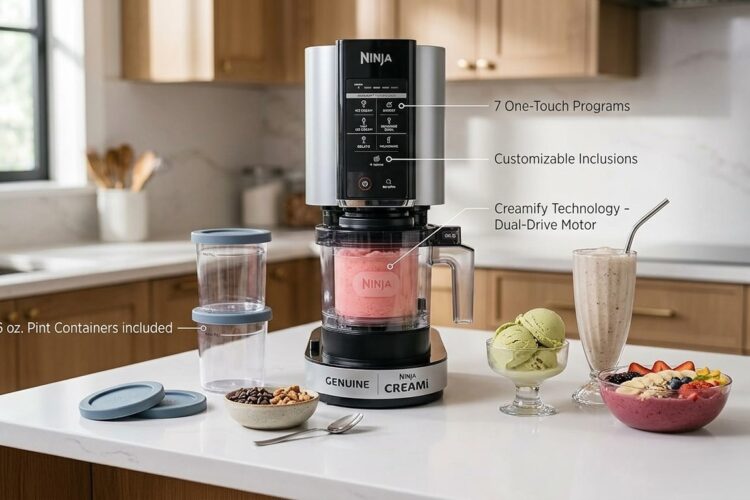
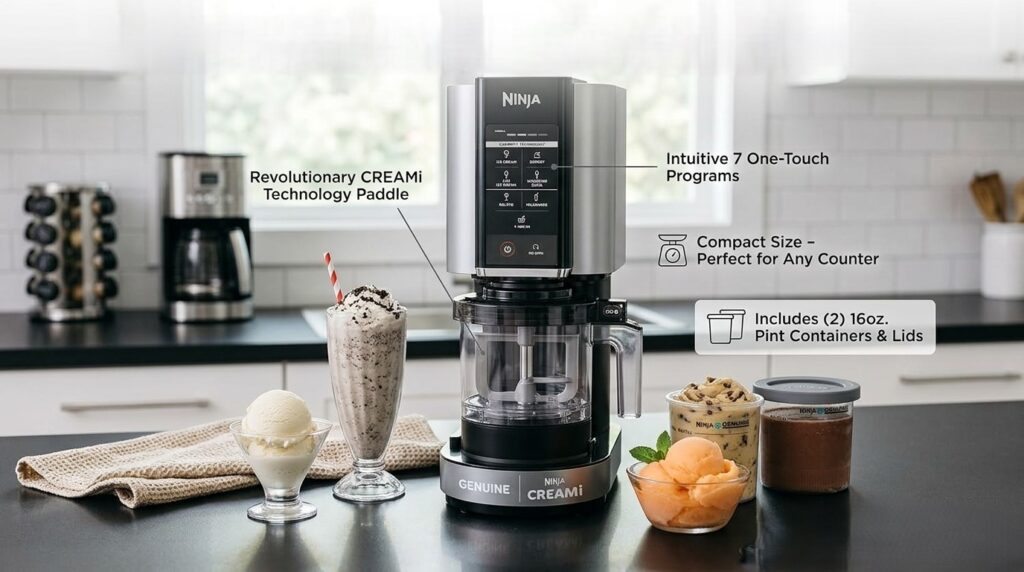
The NC301 features seven preset programs, each designed for different frozen treat types. These include options for ice cream, gelato, sorbet, smoothie bowls, slushi, Italian ice, and a setting for frozen yogurt. Rather than manually adjusting speed or duration, you select your desired program and the machine handles the rest. This simplicity appeals to users who prefer straightforward operation without multiple buttons or settings to navigate.
Included Containers
The package includes two pint-sized containers with matching lids. These containers are designed to fit the machine’s opening and are the vessel in which you’ll freeze your ingredients before processing. Having two containers means you can prepare two different flavors or have one freezing while using the other in the machine.
Compact Footprint
The NC301’s size is notably smaller than many alternative frozen treat makers. This matters for people with limited counter or storage space, including those in apartments, dorm rooms, or smaller kitchens. The compact design doesn’t require a dedicated appliance garage or significant storage commitment.
Motor and Build Quality
The machine is equipped with a motor designed to break down frozen ingredients. The overall construction appears sturdy, with a silver finish that works with various kitchen aesthetics. The motor power is adequate for the machine’s intended use of processing frozen bases rather than creating ice cream from scratch.
Container Design
The included pint containers are freezer-safe and feature lids to prevent freezer burn or odor absorption. The containers are designed to fit snugly in the machine’s opening, ensuring proper processing. Their smaller size compared to typical ice cream maker containers is both a practical advantage for storage and a limitation on batch size.
How You Might Use the NC301
Creating Custom Gelato
Gelato differs from American-style ice cream primarily in texture and fat content. To create gelato using the NC301, you’d prepare a gelato base (traditionally made with milk, cream, sugar, and flavorings), freeze it in one of the included containers, then run it through the gelato program. The result should be smoother and denser than ice cream made with traditional churning, though this depends heavily on your base recipe.
Making Sorbet and Italian Ice
For those interested in dairy-free or lighter frozen treats, the sorbet program provides an option. You’d prepare a fruit or juice-based mixture, freeze it, then process it. This works well for exploring different flavor combinations without committing to large batches.
Blended Smoothie Bowls
The smoothie bowl setting suggests you could process partially frozen smoothie bases. This is useful if you want a consistency thicker than a drinkable smoothie but you’re preparing a bowl format meant to be eaten with a spoon. The exact results depend on your base mixture’s composition.
Mix-in Incorporation
The marketing materials mention mix-in capability. This likely means you can prepare a base with nuts, candy pieces, or other inclusions frozen throughout, and the processing should distribute them within the final product. The extent to which mix-ins break down versus remain intact depends on the specific items chosen.
Slushi and Frozen Beverage Options
The slushi program suggests making partially frozen, spoon-able beverages from juice or flavored liquid. This might appeal to households wanting a frozen beverage option that’s thicker than a smoothie but not fully solidified.
Milkshakes From Frozen Bases
While milkshakes traditionally involve blending ice cream with milk, the NC301’s milkshake program might work with pre-frozen bases combined with liquid additions during processing.
Who This Machine Might Suit
Households With Limited Freezer Space
If your freezer is already crowded, the compact size and smaller batch capacity mean less space dedication compared to traditional ice cream makers with large bowls.
Casual Frozen Treat Enthusiasts
This machine appeals to people who enjoy frozen desserts occasionally but don’t require commercial-grade production. If you’re making treats a few times a month rather than weekly, the smaller batches align with realistic consumption.
Families With Young Children
The compact size and simple operation make this manageable for households with kids. Older children can select programs and watch the machine work, creating an interactive cooking experience. The smaller portions also prevent creating excessive quantities of sugary treats.
Apartment Dwellers and Students
For those in smaller living spaces, this machine’s footprint doesn’t command significant real estate. The included containers store in the freezer alongside regular food items.
Experimentation-Oriented Home Cooks
If you enjoy trying different frozen treat recipes and flavor combinations, the lower commitment of smaller batches encourages experimentation. You’re not dedicating hours or churning equipment to each attempt.
Health-Conscious Users
People interested in controlling ingredient quality and sweetness levels can appreciate making their own bases. You know exactly what’s in your frozen treats, with no artificial additives unless you add them.
Important Considerations Before Purchasing
This Is Not a Traditional Ice Cream Maker
Understanding the distinction matters. This machine doesn’t churn and simultaneously freeze—it processes already-frozen bases. If you want the hands-off, set-it-and-forget-it experience of adding warm custard and returning later to finished ice cream, this approach is different. You must plan ahead and freeze your base beforehand.
Base Recipe Quality Matters Greatly
The machine is only as good as what you put into it. Your success depends on creating quality frozen bases. If you don’t enjoy cooking or developing recipes, you may find the custom-base approach tedious. Some users prefer buying quality ice cream bases or following trusted recipes exactly.
Batch Size Limitations
With pint-sized containers, each batch produces roughly four servings. If you’re feeding a large family or entertaining guests, you’ll make multiple batches. This requires time and planning.
Texture Results Vary
The final texture depends on your base recipe, freezing time, starting temperature, and mix-in selections. Results won’t necessarily match expensive gelato shop products. Managing expectations is important—you’re making good homemade frozen treats, not professional-grade products.
Learning Curve for Bases
If you’re new to making frozen desserts, creating successful bases requires some experimentation. Your first attempts might be too hard, too soft, too icy, or lack the texture you expected. This is a normal part of the process, but it means initial results may disappoint.
Noise Level
Like most blending machines, this operates at a volume that’s noticeable during use. If noise bothers you during breakfast or evening use, that’s worth considering.
Regular Cleaning Required
After each use, you’ll need to clean the processing chamber and any removable parts. The machine isn’t a set-it-and-forget-it appliance in terms of maintenance.
Container Durability
Over time, plastic containers can become brittle or may not freeze as evenly as desired. Treating them carefully and replacing them if they crack or warp maintains performance.
Understanding Frozen Treat Makers: A Broader Perspective
Frozen treat makers fall into several categories, each with different approaches and trade-offs.
Traditional Churning Machines
These machines have an insulated bowl you freeze beforehand, or they feature built-in freezing. You add your liquid mixture and the machine churns while freezing, aerating the mixture and creating texture. The trade-off: they require advance freezing time (often 24 hours) for the bowl, or they’re more expensive due to built-in compressors. The advantage: you watch the transformation happen live, and the churning action creates excellent texture.
Sorbet and Ice-Only Makers
Some machines specialize in creating sorbet or shaved ice from frozen fruit or juice. These are single-purpose but excellent for their specific function.
Blender-Based Approaches
Using a regular blender to process frozen fruit and liquid is a no-cost option. The results depend on your blender’s power, and you can’t make traditional ice cream this way, but it works for smoothie bowls and slushies.
Commercial Immersion Methods
Liquid nitrogen or dry ice approaches create incredible texture and restaurant-quality results. These require purchasing specialty materials and aren’t practical for home cooks.
The CREAMi Approach
The NC301 sits between casual home blending and serious ice cream making. It requires more planning than grabbing a blender but less equipment than traditional ice cream makers. It’s designed to make the process simpler than churning, though it requires different skill development (creating freezable bases rather than managing churning parameters).
Frequently Asked Questions
Can I use store-bought ice cream in the NC301?
While some users report attempting this, store-bought ice cream is typically formulated to remain scoopable from the freezer. Freezing it solid in the containers and processing may not yield the desired result—it might become overly soft or grainy rather than achieving the intended texture. The machine is designed for homemade bases, which freeze differently.
How long does it take to make a frozen treat?
The machine itself takes several minutes to process a frozen container (typically three to five minutes depending on the program). However, the base must freeze beforehand, which requires overnight or several hours in the freezer. The total time from start to finish is at least 12 hours, usually longer.
What if my base doesn’t freeze solid?
This is a common question. Bases with high sugar or alcohol content may not freeze completely solid, as these ingredients lower the freezing point. If this happens, you might achieve a slushi-like consistency rather than a scoopable frozen treat. Adjusting your base recipe by reducing sugar or alcohol content, or using different ingredients, can help.
Can I make dairy-free frozen treats?
Yes. Sorbet, Italian ice, and other dairy-free bases work well. You’d use fruit juice, purees, or coconut milk as your base instead of cream and milk. The sorbet program would be your go-to setting.
Is this machine loud?
Yes, it operates audibly during processing. It’s similar to a blender in terms of noise level. If you live in a space where morning or evening noise is an issue, this is worth noting.
What’s the warranty and customer support like?
This varies by retailer and region. The manufacturer typically provides a standard warranty covering manufacturing defects. Support availability depends on where you purchase. It’s worth checking the terms before buying.
Can I use ingredients like cookie dough, brownies, or other mix-ins?
Mix-ins can be added to your base before freezing. How much they break down during processing depends on how frozen and hard they are. Softer additions like chocolate chips might soften and blend more; harder pieces might break into smaller fragments. Testing with small quantities is recommended.
Do I need any special freezer features?
A standard freezer works fine. You just need enough space for the two pint containers and room for them to freeze completely without obstruction.
How often should I clean the machine?
After each use, clean the processing chamber and blade assembly. Residual frozen material can harden and become difficult to remove if left sitting, so cleaning immediately after use is recommended. Most removable parts are straightforward to clean by hand or dishwasher.
Conclusion
The Ninja CREAMi NC301 occupies a specific niche in the frozen treat maker landscape. It’s not the most advanced option available, nor is it the cheapest entry point into making frozen desserts at home. What it offers is a middle-ground approach: simpler than traditional ice cream churning, with better texture results than basic blending, all in a compact package that doesn’t demand significant counter or storage space.
This machine works well for people who enjoy the idea of customizing frozen treats, prefer smaller batches, have space constraints, or want to introduce kids to the process of making simple frozen desserts. It’s less ideal for those seeking completely hands-off operation or those who want to produce large quantities frequently.
Success with this machine depends on understanding that it requires advance planning (frozen bases), acceptance of its batch size limitations, and willingness to experiment with homemade bases. If you approach it with realistic expectations and genuine interest in the process, it can become a regular part of your kitchen routine.