Introduction
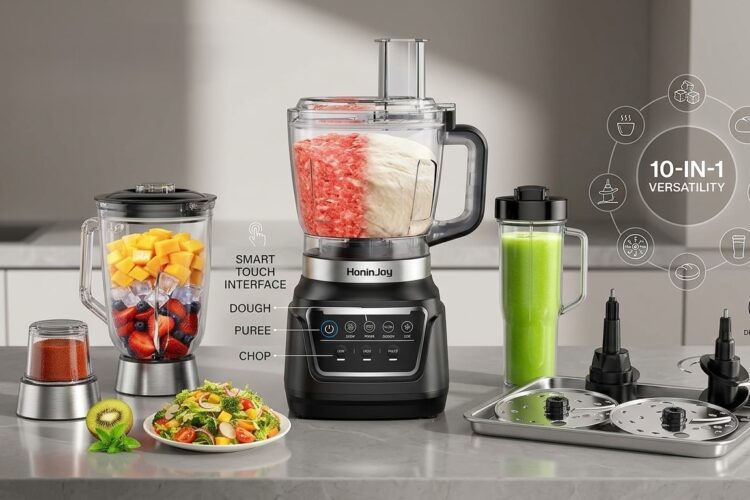
The modern kitchen has undergone a significant transformation over the past decade. Gone are the days when home cooks needed to maintain a separate appliance for every task—a dedicated blender for smoothies, a food processor for chopping vegetables, a separate grinder for spices, and perhaps another tool for making dough. Today, multi-functional kitchen appliances have emerged as practical solutions for people looking to maximize their counter space while maintaining versatility in food preparation.
The concept of the all-in-one blender and food processor represents a significant evolution in kitchen technology. These devices attempt to consolidate the capabilities of multiple specialized tools into a single unit, which appeals to various segments of home cooks: those living in smaller spaces, people who cook frequently but prefer minimal equipment cleanup, busy individuals seeking efficiency, and anyone curious about whether one appliance can genuinely replace several others.
Understanding what these machines can and cannot do, along with their practical applications and limitations, helps you make an informed decision about whether such a device fits your cooking style and kitchen needs. This guide explores the landscape of multi-functional food preparation appliances and what they offer to different types of households.
Understanding Multi-Functional Kitchen Appliances
Before diving into specific capabilities, it’s worth understanding what makes a multi-functional appliance different from traditional single-purpose tools. A traditional blender excels at creating smooth beverages and purees. A dedicated food processor is optimized for slicing and dicing with precision. A spice grinder focuses on creating consistent, fine powders from whole seeds and dried goods.
When manufacturers combine these functions into one unit, they’re essentially creating a device that performs adequately across multiple tasks rather than achieving perfection in a single task. This represents a different design philosophy than specialization, and understanding this distinction helps explain why some users find these appliances invaluable while others might find certain aspects limiting.
Key Features of Multi-Functional Food Preparation Systems
Power and Motor Performance
A significant factor differentiating multi-functional appliances is motor strength. These devices need sufficient power to handle ice crushing, frozen fruits, and tough ingredients like whole grains or nuts—tasks that would quickly strain a weaker motor. Professional-grade motors in these systems are typically designed with higher wattage output compared to basic blenders, allowing them to process demanding ingredients without bogging down.
The power delivery affects how quickly the motor can pulverize ice, break down fibrous vegetables, or knead dough. More powerful motors generally complete these tasks more efficiently and consistently, though they also consume more electricity during operation.
Multiple Attachment and Blade Systems
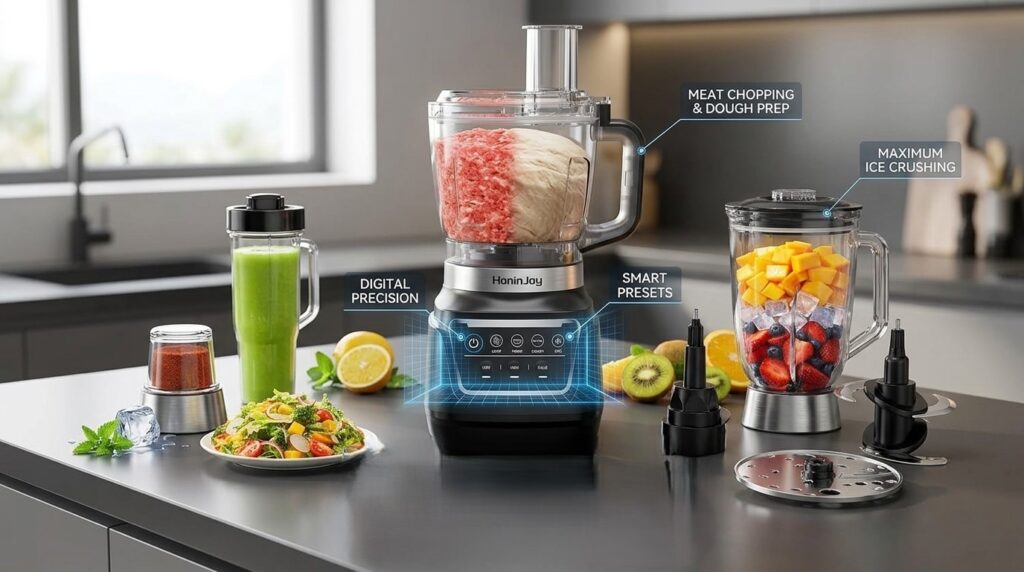
The versatility of these appliances comes from their use of different blade and attachment configurations. Rather than having a single fixed blade, multi-functional devices typically include:
Blending blades designed to create smooth, homogeneous mixtures by combining ingredients at high speeds. These blades work effectively for smoothies, soups, and purees.
Chopping/food processing blades that create distinct pieces rather than complete smoothness. These work through a different cutting motion than blending blades, allowing you to maintain some texture in foods.
Grinding components for processing harder substances like coffee beans, whole grains, or spices into finer particles.
Dough hooks or mixing attachments that knead and combine dough through a different mechanical action than blending.
Slicing and shredding discs that create consistent cuts or julienne shapes through a rotating mechanism.
Having access to these different systems in one device means you’re not limited to what a single blade configuration can do.
Container and Capacity Considerations
Different tasks often require different vessel sizes. Grinding a small amount of spices in a massive container designed for smoothies isn’t efficient. These systems often include multiple container sizes—a larger pitcher for blending drinks and soups, and smaller bowls for processing smaller quantities of ingredients.
The material of these containers matters as well. Most modern multi-functional appliances use durable plastic for the main pitchers and food processing bowls, though glass alternatives may be available. Durability, resistance to staining, and whether components are dishwasher-safe are practical considerations that affect long-term usability.
Speed Control and Settings
Flexibility in speed control allows you to match the motor’s intensity to your task. Slower speeds work well for gently combining ingredients, while higher speeds handle tougher jobs. Preset programs for common tasks—smoothies, soups, dough—can simplify operation by automatically managing speed and duration. However, understanding manual speed control gives you more precision for specific results.
Safety and Protective Features
Quality multi-functional appliances include safety mechanisms that prevent operation when components aren’t properly assembled, automatic shut-off features, and stable bases that resist tipping during operation. Non-slip feet keep the appliance stable on countertops, particularly important when dealing with the vibrations that come from processing tough ingredients.
Practical Applications and Everyday Uses
Beverage Preparation
The foundational use for these appliances remains beverage making. You can blend smoothies, fruit juices, protein shakes, and cold beverages quickly. The high-speed blending action combines fruits, vegetables, liquids, and supplements into uniform mixtures. People who make several smoothies weekly find this convenient.
Beyond just cold beverages, these systems can also create hot soups through friction-based heating—the motor’s power generates enough heat to warm blended soups when processed for extended periods, though some models include heating elements to speed this process.
Vegetable and Ingredient Preparation
The food processing capabilities handle tasks like chopping onions, garlic, carrots, and other vegetables with consistency. Rather than hand-cutting, you can process uniform pieces in seconds. This particularly benefits people who cook regularly and spend considerable time in prep work. The difference between hand-chopping vegetables for several recipes and using a processor for the same task can amount to significant time savings across weekly meal preparation.
Slicing and shredding functions handle uniform cuts of vegetables and cheese, which matters when you’re preparing components for specific dishes that benefit from consistent sizing.
Grain and Seed Processing
Many people grind their own coffee beans, which produces fresher coffee than pre-ground options. Beyond coffee, these appliances can process grains into flour, create nut butters from whole nuts, and grind whole spices into powders. Home cooks interested in working with whole ingredients rather than pre-processed versions find this capability particularly valuable.
Dough Making and Mixing
The dough-making function handles tasks like kneading bread dough, mixing cake batters, and combining cookie dough. Kneading dough by hand is labor-intensive; an appliance that can handle this task appeals to people who bake regularly. The mechanical kneading action works ingredients together more consistently than hand mixing for certain applications.
Nut and Seed Butter Creation
Whole nuts processed at high speed eventually break down into butters. You can make almond butter, peanut butter, or seed butters by processing these ingredients for extended periods. This appeals to people who prefer knowing exactly what’s in their nut butters without additives.
Frozen Dessert Making
Ice crushing capability enables making frozen drinks, frozen desserts, and smoothie bowls. The power required to break apart ice demands a strong motor, which these appliances should possess.
Who These Appliances Might Suit
Frequent Home Cooks
People who cook regularly and spend considerable time on food preparation tend to find multi-functional appliances most useful. The time savings from having multiple functions available without switching between devices adds up across numerous weekly cooking tasks.
Space-Conscious Individuals
Apartments, smaller kitchens, and households with limited counter or storage space benefit significantly. One appliance occupying one corner of the counter replaces what might otherwise require space for a blender, food processor, coffee grinder, and possibly other specialized tools.
People Exploring Specialized Diets
Those following specific dietary approaches—smoothie-based diets, whole-grain cooking, making plant-based milks or butters from whole nuts—often use multiple food preparation functions regularly.
Households with Multiple Cooking Styles
Some people blend smoothies daily, some make fresh juices, some grind spices, and some bake frequently. Families with diverse cooking interests might find that the versatility addresses multiple members’ needs from a single device.
Anyone Interested in Reducing Processed Foods
Grinding your own grains, making spice blends from whole seeds, and preparing components from whole ingredients requires tools. These appliances provide access to several such tools without purchasing multiple machines.
Important Considerations Before Purchasing
Understanding Realistic Capabilities
It’s essential to approach these devices with realistic expectations. A multi-functional appliance will perform all its functions adequately, but not necessarily as excellently as a specialized tool designed specifically for a single task. A dedicated coffee grinder optimized for consistency might produce slightly more uniform grounds than a multi-functional machine’s grinding bowl. A traditional food processor optimized for slicing might create more uniform vegetable cuts.
For many households, this trade-off—from perfect performance in one task to adequate performance across many—represents excellent value. However, if you have specific needs that demand the absolute highest performance in one particular function, a specialized appliance might better serve those needs.
Motor Noise Considerations
Powerful motors that handle tough tasks naturally generate noise. These appliances tend to be louder than smaller single-function blenders, particularly when processing ice or hard ingredients. If you have noise sensitivity or live in a noise-sensitive environment, testing the actual noise level before purchasing can prevent frustration.
Counter Space and Storage
While these devices are more space-efficient than multiple appliances, they still require room on your counter or in your cabinets. A large multi-functional appliance still occupies significant footprint. Consider whether you have adequate space before assuming the device is the solution to counter clutter.
Cleaning and Maintenance
Multiple functions mean multiple components to clean and maintain. Blade systems, attachments, containers, and seals all need regular cleaning. Whether components are dishwasher-safe (which most are) significantly affects maintenance burden. Some people find the convenience of multiple dishwasher-safe components valuable; others view the multiple pieces as more complicated than they’d prefer.
Learning Curve
Using different functions effectively requires understanding how each one works. The blending function operates differently from the food processing function, which operates differently from the dough-making function. Reading instructions, potentially watching tutorials, and doing some experimentation helps you get optimal results from each function.
Comparing Multi-Functional Appliances to Traditional Equipment
Multi-Functional Unit vs. Dedicated Blender and Food Processor
A dedicated food processor and a dedicated high-powered blender together cost roughly comparable to a multi-functional unit. The advantage of the multi-functional approach is that a single device takes up less space and comes with a single electrical outlet requirement. The advantage of two dedicated appliances is that each might excel more in its specific function, and you can use both simultaneously if needed (preparing a sauce in the processor while blending drinks, for example).
Space Efficiency
This is where multi-functional units have a clear advantage. One device replacing three or four pieces of equipment substantially reduces counter and storage demands.
Versatility
If you use multiple functions regularly, consolidation into one appliance simplifies your routine. If you primarily use one or two functions and rarely use others, purchasing specialized equipment for your frequent tasks might make more sense.
Budget Considerations
Depending on brands and models, the cost equation varies. Sometimes purchasing a quality multi-functional unit costs less than purchasing quality dedicated appliances for each task. Sometimes the opposite is true. Comparing specific products in your market provides the most accurate picture.
Frequently Asked Questions
Can These Appliances Really Replace All My Kitchen Prep Tools?
Not entirely, but they can replace most. Specialized tasks like using a immersion blender for precise control in a pot or a microplane grater for fine zesting have their place. However, for the majority of everyday food preparation tasks, a quality multi-functional appliance handles most needs.
How Much Noise Should I Expect?
Expect more noise than a basic blender. Processing ice, grinding grains, or kneading dough generates substantial noise from the powerful motor. Most run between 80-90 decibels during operation, which is considerably louder than normal conversation but comparable to a busy street. Using the appliance at times when noise won’t disturb others is often practical.
Are All the Functions Truly Useful, or Are Some Just Marketing?
This varies by user. Someone who never bakes won’t use the dough-making function regardless of its capabilities. Someone who doesn’t grind spices won’t use grinding functions. However, for people who do engage in diverse food preparation—smoothies one day, soup the next, fresh spice blends the week after—most functions prove genuinely useful.
How Long Do These Appliances Typically Last?
Quality multi-functional appliances are built to last, with many users reporting years of reliable service. Like any electrical appliance, lifespan depends on usage frequency, care, and manufacturing quality. Regular cleaning, proper assembly, and not exceeding the appliance’s intended use generally support longevity.
Can I Use It for Nut Butters if I Only Do a Small Amount?
Yes, though you might need patience. Processing a small amount of nuts for nut butter works, but you’ll want to allow sufficient processing time. Some models include smaller bowls designed for smaller quantities, which works more efficiently than filling a large bowl with minimal ingredients.
What About Making Hot Soups?
Some multi-functional appliances include heating elements that warm blended soup during processing. Others create heat purely through friction of the blending action—the motor’s power generates sufficient friction to warm contents during extended blending. Both approaches work, though the heating element approach provides more predictable temperature control.
Are the Containers and Attachments Durable?
Most modern multi-functional appliances use durable materials designed to last. Plastic containers resist breaking and staining when properly maintained. Blade systems are typically stainless steel or similar durable metals. However, paying attention to manufacturer care instructions—avoiding excessive heat, not using improper utensils that might damage surfaces, and maintaining seals—extends component life.
Can I Really Make Dough in These Appliances?
Yes, though the results depend on the appliance and your dough recipe. The dough hook or mixing attachment kneads dough through mechanical action. Bread doughs, cookie doughs, and similar preparations work well. Very stiff doughs or massive quantities might challenge the appliance, but ordinary household bread and dough baking can be accomplished.
What’s the Power Requirement?
Most multi-functional appliances operate on standard household electrical current. However, the motor power consumption is higher than basic appliances. Some people with older electrical systems or limited outlet capacity might need to consider where they’ll plug in the device.
Is There a Learning Curve?
Most functions are intuitive—you assemble the appropriate attachment, add ingredients, and operate the appliance. However, optimizing results for each specific function comes with some experimentation. The instruction manual guides you through each function’s intended use, and many manufacturers provide recipe guides or video demonstrations online.
Conclusion
Multi-functional blender and food processor appliances represent a practical approach to kitchen efficiency, particularly valuable for people who engage in diverse food preparation tasks, live in space-limited environments, or prefer consolidating multiple tools into a single device. These appliances perform adequately across numerous functions—from beverage blending to vegetable processing to dough making—without requiring the specialized design optimization of dedicated single-function appliances.
Whether such a device aligns with your cooking needs depends on your household’s specific usage patterns, kitchen space, and priorities. For frequent cooks who regularly use multiple functions, these appliances often prove invaluable. For those with very specific, specialized needs in one particular function, dedicated equipment might remain preferable.
If you’re considering a multi-functional appliance for your kitchen, examining the specific capabilities of available options, understanding their realistic limitations, and considering how you actually prepare food in your daily routine guides the most appropriate choice for your situation.